
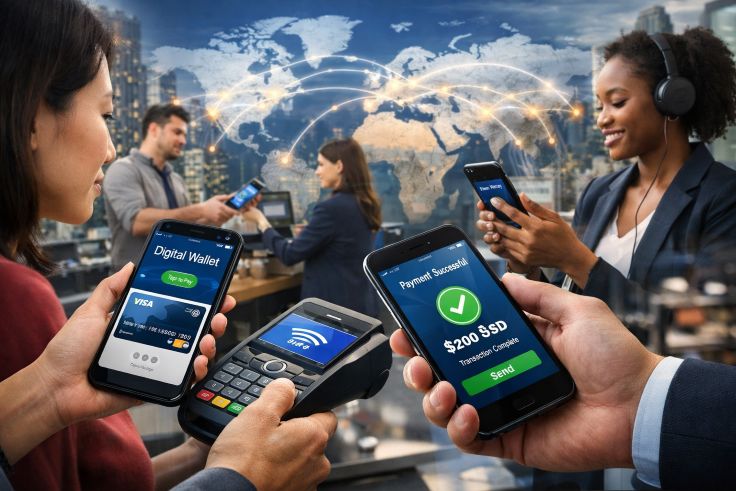
More than 80 countries now operate or are developing instant payment systems, reflecting a global shift toward faster digital transactions. As governments expand real-time payment infrastructure, competition among digital wallets, banks, and fintech firms is accelerating. These developments are reshaping online payment ecosystems and influencing how consumers move money, make purchases, and manage finances.
Real-Time Payments Drive Market Competition
Recent initiatives such as the Federal Reserve’s FedNow Service in the United States, UPI in India, and the European Payments Initiative demonstrate growing public investment in instant payment networks. Data from the Bank for International Settlements indicates that faster payment systems can improve transaction efficiency while reducing settlement delays.
As these networks expand, digital wallet providers are racing to attract users with integrated services, loyalty programs, and seamless payment experiences. Banks are modernizing mobile applications to remain competitive, while fintech companies continue introducing innovative features such as peer-to-peer transfers and embedded financial services.
Benefits and Challenges for Consumers
Research from the World Bank shows that digital payment adoption can increase financial inclusion by giving more people access to formal financial services. Consumers benefit from faster transfers, reduced reliance on cash, and improved convenience across online and physical retail channels.
However, experts note that rapid growth also creates challenges. Cybersecurity threats, fraud prevention, data privacy concerns, and system interoperability remain significant issues. Reports from the International Monetary Fund highlight the importance of balancing innovation with regulatory oversight to maintain trust in digital financial systems.
Future Implications for Consumer Spending
Evidence suggests that instant payments will become a standard expectation rather than a premium service. As governments continue supporting payment modernization, competition among financial institutions and technology providers is likely to intensify. Consumer spending habits may increasingly favor fast, integrated, and mobile-first payment experiences. The long-term outcome will depend on how effectively industry participants combine convenience, security, and accessibility while adapting to evolving digital commerce demands.